
Efficient warehouse operations are critical to maintaining accurate inventory, meeting delivery timelines, and supporting business growth. However, many businesses still struggle with delays, stock discrepancies, and manual processes that limit visibility.
As order volumes increase and operations become more complex, warehouse inefficiencies can quickly impact overall performance. Therefore, understanding and optimising your warehouse process flow is essential.
This guide breaks down the warehouse process step by step and highlights how businesses can improve efficiency with the right system.
What Is a Warehouse Process?
A warehouse process refers to the sequence of activities involved in managing inventory within a warehouse from receiving goods to shipping them out.
These processes ensure that inventory is:
- Accurately tracked
- Properly stored
- Efficiently picked and dispatched
When managed well, warehouse processes improve accuracy, reduce costs, and enhance operational control.
Key Warehouse Process Steps
1. Receiving
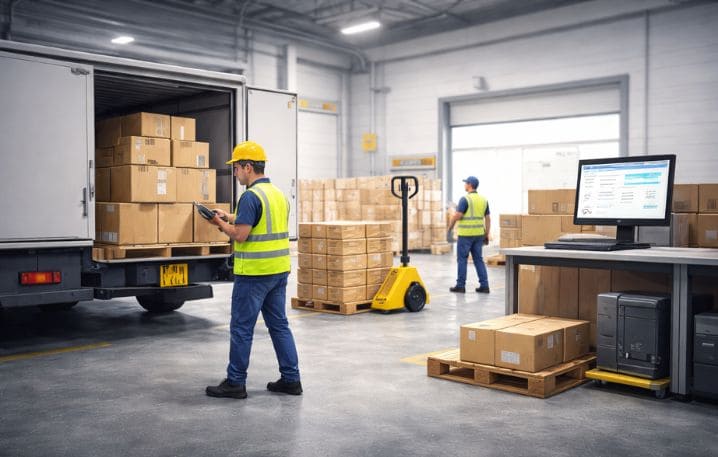
Receiving is the foundation of your entire warehouse process. Any error at this stage will carry forward into inventory discrepancies, picking mistakes, and fulfilment issues.
At this stage, operations should include:
- Verifying goods against purchase orders
- Checking for damages or incorrect items
- Recording quantities into the system immediately
- Labelling items with barcodes or identifiers
In many businesses, receiving is still done manually. As a result, stock may be recorded incorrectly or delayed in the system.
A structured receiving process ensures that inventory accuracy starts from the very first touchpoint.
2. Putaway
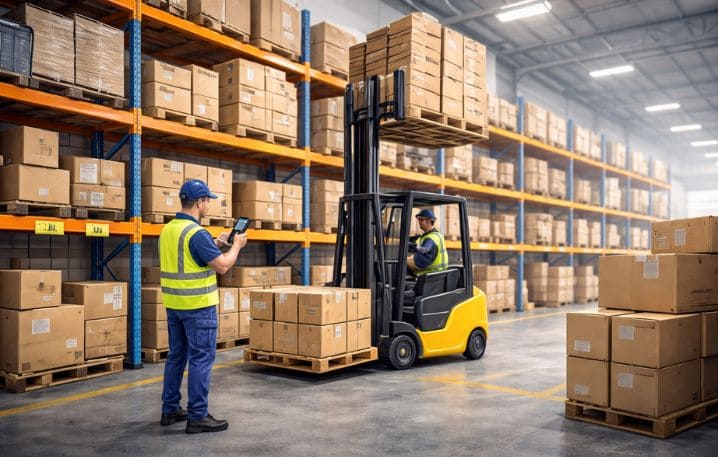
Putaway determines how efficiently your warehouse operates afterwards. It is not just about placing items on shelves it is about placing them strategically.
An effective putaway process involves:
- Assigning optimal storage locations based on item type or demand
- Using bin or location codes for easy tracking
- Reducing travel time for future picking
Without a defined putaway strategy, items are often placed wherever space is available. Consequently, this leads to longer picking times and misplaced inventory.
A well-managed putaway process improves both speed and accuracy downstream.
3. Storage
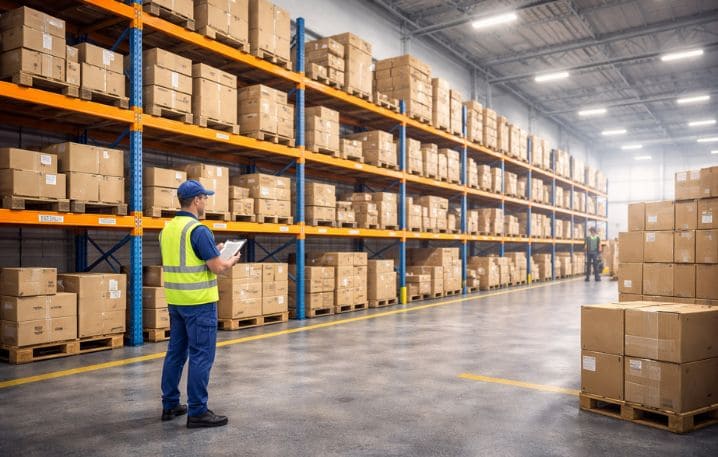
Storage is where inventory resides until it is needed. However, poor storage organisation is one of the most common causes of inefficiency.
Best practices include:
- Categorising items based on movement (fast-moving vs slow-moving)
- Implementing FIFO or FEFO methods where applicable
- Ensuring clear labelling and visibility of stock locations
In addition, storage should be designed to minimise handling and maximise accessibility.
When storage is optimised, teams spend less time searching for items and more time executing orders.
4. Picking
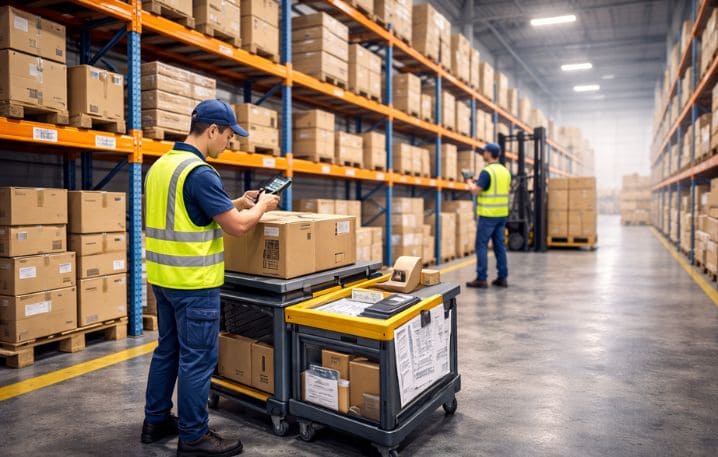
Picking is often the most labour-intensive and error-prone step in the warehouse process. It directly impacts order accuracy and customer satisfaction.
There are several picking methods businesses may adopt:
- Single order picking
- Batch picking
- Zone picking
However, regardless of method, the key is accuracy and speed.
Common challenges include:
- Picking wrong items
- Inefficient routing
- Lack of real-time stock updates
With proper systems and workflows, picking can be significantly streamlined, reducing both errors and processing time.
5. Packing
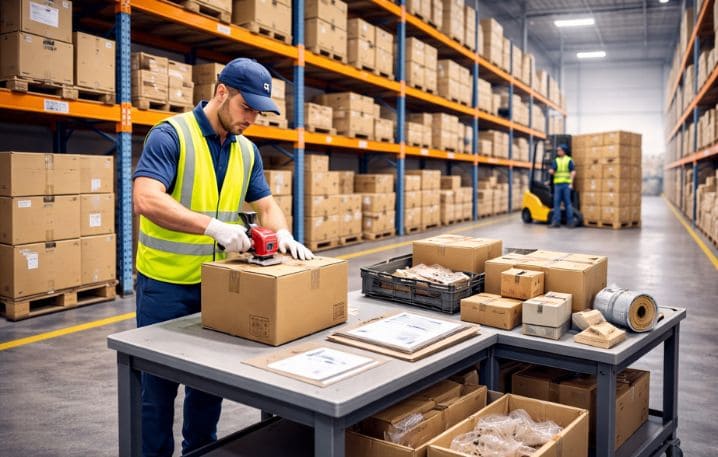
Packing ensures that orders are prepared correctly before shipment. While it may seem straightforward, this step plays a critical role in preventing returns and maintaining customer satisfaction.
A structured packing process includes:
- Verifying picked items against order details
- Using appropriate packaging materials
- Generating labels and documentation
Errors at this stage often result in incorrect deliveries or damaged goods.
Therefore, packing should always include a final verification step before dispatch.
6. Shipping
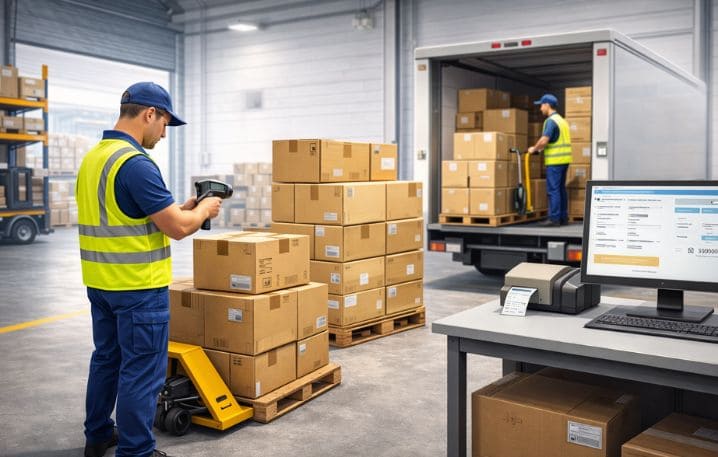
Shipping is the final stage of the warehouse process, where goods are dispatched to customers or distribution channels.
At this stage, operations typically involve:
- Scheduling shipments
- Assigning delivery methods or carriers
- Generating tracking information
Delays or miscommunication during shipping can impact delivery timelines and customer experience.
A well-coordinated shipping process ensures that orders leave the warehouse accurately and on time.
Common Warehouse Process Challenges
While the process appears straightforward, many businesses encounter operational issues.
Lack of Real-Time Visibility
Without accurate, real-time data, teams struggle to track inventory movement.
Manual Errors
Spreadsheet-based or paper-based processes increase the risk of mistakes.
Inefficient Coordination
Disconnected systems lead to miscommunication between teams.
Time-Consuming Processes
Manual updates and checks slow down operations significantly.
Real Scenario: When Warehouse Processes Break Down
For example, a growing warehouse handling hundreds of SKUs relied on manual tracking. Initially, operations were manageable. However, as order volume increased, inefficiencies became more apparent.
As a result:
- Stock discrepancies increased
- Picking errors became frequent
- Fulfilment delays affected customer satisfaction
Clearly, the warehouse process was no longer scalable without system support.
How Axacute Improves Warehouse Process Efficiency
To address these challenges, businesses need more than just defined processes—they need the right system to support them.
Axacute is designed to optimise warehouse operations through:
Real-Time Inventory Tracking
Stock levels are updated instantly, providing accurate visibility across all stages.
Barcode-Enabled Operations
Receiving, picking, and stock movements are captured efficiently, reducing errors.
End-to-End Traceability
Every movement is recorded, allowing full visibility from inbound to outbound.
Improved Workflow Coordination
Teams operate on a single system, reducing miscommunication and delays.
Faster Processing
Automation reduces manual workload and speeds up operations.
Best Practices for Optimising Warehouse Processes
To further improve efficiency, businesses should adopt the following:
- Implement barcode systems for accuracy
- Standardise workflows across teams
- Optimise warehouse layout for faster movement
- Use data insights to improve decision-making
- Reduce reliance on manual processes
When Should You Improve Your Warehouse Process?
You should consider optimising your warehouse operations if:
- You experience frequent stock discrepancies
- Order fulfilment is slow or inconsistent
- Your team spends excessive time on manual tasks
- Your business is scaling and complexity is increasing
Final Thoughts
A well-structured warehouse process is the foundation of efficient operations. While defining steps is important, the real impact comes from execution—and execution depends on having the right tools.
As businesses grow, manual processes are no longer sufficient. Systems like Axacute enable real-time visibility, reduce errors, and support scalable operations.
Ready to Optimise Your Warehouse Operations?
If your current processes are limiting efficiency, it may be time to adopt a more structured and system-driven approach.
Discover how Axacute helps businesses streamline warehouse processes, improve accuracy, and scale with confidence. Contact us today at enquiry@axacute.com